
WINE GUIDE
Organic Wines
Everything you need to know about organic and bio-dynamic wine.
Organic Wine
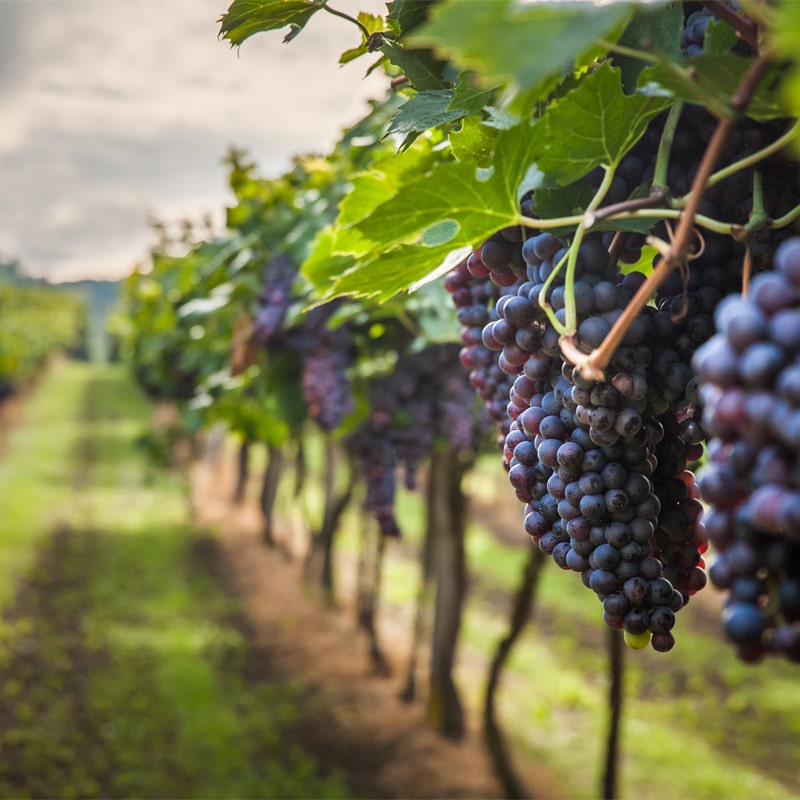
Organic wineries are becoming more popular, and the grapes produced are done so without any chemicals – including fertilisers and pesticides, leaving the vines to grow as naturally as possible.
While excellent for the planet and our future, it can be risky to not use any form of pesticides given that grapes can be affected by a variation of different diseases. Climate can be a factor in the success of organic wine, with some climates lending themselves more favourably to this style of wine production, however, we can expect to see this as a growing trend amongst winemakers as more people embrace a more environmentally friendly lifestyle.
Bio-Dynamic Wine
You may have not come across the term bio-dynamic wine, but it may be familiar in regard to agriculture and farming. Bio-dynamic farming was a series of practices founded in the 1920s on the ideas of Austrian philosopher Rudolf Steiner. Traditionally, this style of farming was based on the lunar calendar, although in more modern times this has led to controversy. Despite this, the bio-dynamic practices used in vineyards are done with the aim of viewing your plot as an entire eco-system on its own and improving the land on which you farmed, ready for future generations. This idea of self-sustainability is based on all natural products, with no chemicals or pesticides and fertilisation is achieved by a range of animals being left to live on the land.
To help the vineyards grow, natural materials are used, especially regarding fertilisation, as all bio-dynamic vineyards will have animals living on the land to help fertilise and enrich the soil, but ideally, the vineyards should be left predominately to nature and allowed to flourish and create its own ecosystem.
Although it is similar to the practice of organic wine making, there are differences, mainly that unlike organic wine, which is simply produced with organic grapes and no chemicals, bio-dynamic wine is produced by farming practices that include the entire vineyard, following a specific bio-dynamic calendar, usually the lunar cycle, and splitting the farming process into different kinds of days on which planting, pruning and harvesting takes place. These are known as flower days, root days, fruits days and leaf days. Each bio-dynamic farming practice can only take place on certain days.
Although some of the practices do not have scientific proof that a difference can be made to the wine, this type of wine production does benefit the environment and is an excellent example of sustainable practice.
FIRTH & CO
More Wine Guides
WINE GUIDE
Our Producers
We work very closely with our supply partners from all over the world. We hope you enjoy browsing their websites.
WINE GUIDE
Vegetarian Wines
Everything you need to know regarding vegetarian and vegan wines to find out what is suitable for your diet.
WINE GUIDE
Natural Wines
Learn more about what goes in to making natural wines, with all it’s advantages and disadvantages.
WINE GUIDE
Food & Matching Wines
By learning what works well together, you have the knowledge to choose the right wine accompaniment for any future dishes.
WINE GUIDE
Bottle Sizes
Here you can find the most commonly used bottle sizes, their names and whether they are specific to a particular region.
Wine List - The Andes Edition
We take pride in presenting you with the Firth & Co Wine List.
Discover our carefully curated collection of wines from around the world. From everyday favourites to exceptional bottles for special occasions, our wine list brings together a diverse selection of styles, regions and producers. Explore new discoveries, old favourites and something to suit every taste and occasion.
This is a working copy of our wine list and is subject to change as we continue to refine and update our portfolio.
To view, please click the link below

STAY IN THE LOOP
Newsletter
We look forward to telling you about many great wines, interesting producers, special offers, as well as new ideas and plans for the future in our regular newsletters.
Your data will be handled in accordance with our Privacy Notice